Picture this: sunrise over saguaros, a quiet barn aisle, and a mid‑morning ride straight from your gate to miles of desert trails. If you dream about a Western lifestyle with space for horses, Cave Creek delivers it with a small‑town feel and big‑open‑space access. Still, buying a horse property here involves important zoning, utility, and maintenance details that can shape your daily life and budget. In this guide, you’ll learn what owning a horse property in Cave Creek is really like, plus the key checks to make before you buy. Let’s dive in.
Why Cave Creek works for horse owners
Cave Creek protects a desert‑rural character with open space, low density, and a visible equestrian culture. The town spans about 37.7 square miles and is home to roughly 5,100 residents, which helps keep a quieter, small‑town pace compared to urban Phoenix. You feel that scale on the trails, at local events, and in the everyday ease of hauling out or riding out from home. U.S. Census QuickFacts outlines the town’s size and population context.
You also see Cave Creek’s priorities in its buyer guidance. The town highlights how zoning, trail connections, wells and septic shape rural living, which is essential if you plan to keep horses on your property. You can review the town’s summary in the Notice to Prospective Property Owners.
Zoning basics: what allows horses
In town limits, many horse properties fall within Desert Rural (DR) zoning. According to the town’s buyer notice, in DR zones the possession of horses or other livestock is a right when you own at least two contiguous acres. Always confirm the parcel’s exact zoning and the contiguous‑acre requirement before you write an offer. You can start with the town’s buyer notice.
Just outside town limits, rules shift to Maricopa County. Rural county zoning permits agricultural and equestrian uses, but boarding beyond modest accessory levels or certain commercial equestrian activities can require a Special Use Permit. If you plan to board, teach lessons, or host events, review the county’s guidance and ask about thresholds early. See Maricopa County’s zoning for agricultural and equestrian uses.
One more key layer: CC&Rs. Even when zoning allows horses, subdivision covenants can restrict or prohibit livestock. During escrow, make sure your title review covers recorded CC&Rs and any final plat notes that address equestrian use.
Trails and ride‑out access
Trail access is a big part of why people buy in Cave Creek. The town maintains a multi‑use network that links neighborhoods to conserved open space and regional parks. Many properties advertise “easy ride‑out,” but the details matter. Confirm whether a home has a deeded trail easement, direct gate access, or simply proximity to a public trailhead. Start with the town’s Trails and Parks information and verify any claimed access during due diligence.
What you’ll see in local horse properties
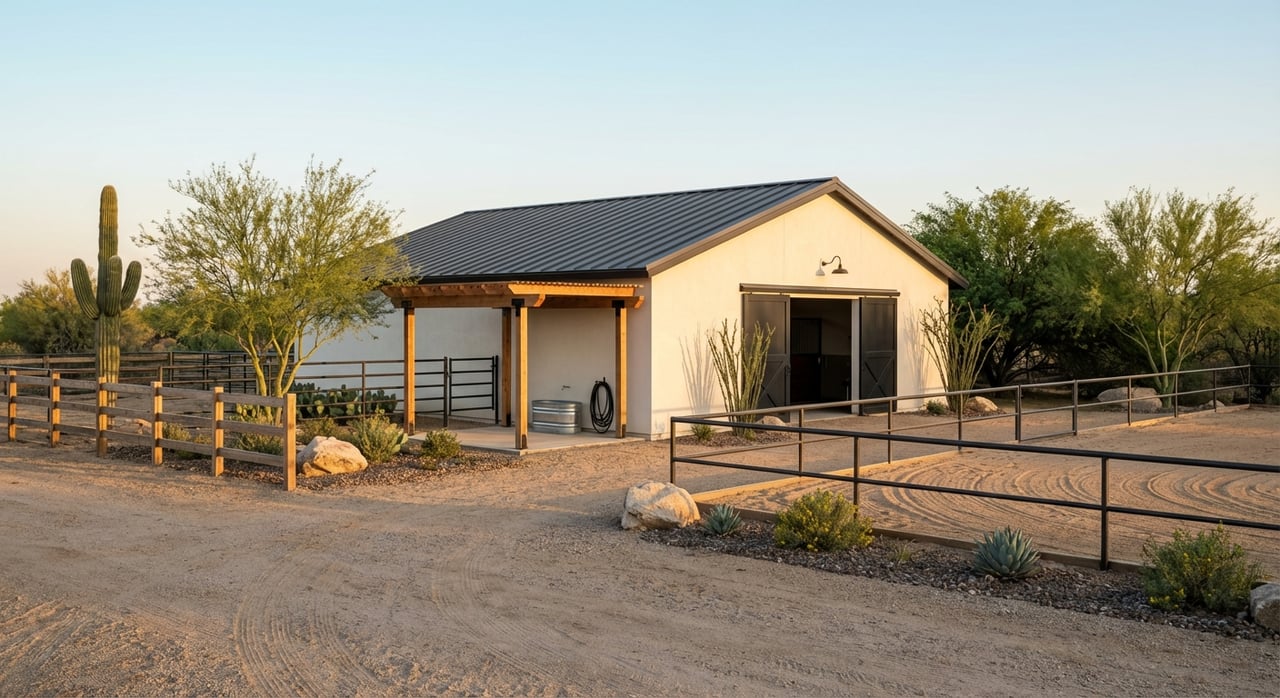
Listings in Cave Creek often feature 2 to 5 plus acres, with larger estates also available. Common equestrian improvements include:
- Multi‑stall barns with tack rooms
- Covered loafing sheds and shade structures
- Arenas or roping arenas with water access for dust control
- Round pens and cross‑fencing for turnout management
- Automatic waterers and dedicated hay or equipment storage
- RV or shop buildings for trailers and tools
Turnkey properties may bundle many of these features. Others offer great land and access but need new fencing or an upgraded arena. Budget both for what exists and for the improvements you want to add.
Utilities and permits to verify
Rural living in Cave Creek comes with well and septic realities. Plan for careful checks during inspection and escrow.
- Water and wells. Many parcels rely on private wells. Ask for the well registration, well logs, and recent water‑quality tests. If you plan to drill or modify a well, review the Arizona Department of Water Resources well FAQs for permit steps and county review triggers.
- Septic systems. Onsite wastewater systems are common and must be inspected by a qualified professional before property transfer. Maricopa County requires a Report of Inspection within six months of closing. Learn more at Onsite Wastewater Ownership Transfer.
- Building permits and future upgrades. New barns, covered arenas, or large outbuildings will likely need permits. If you plan to board or teach lessons, confirm whether your intended use is considered accessory or if it needs a Special Use Permit. Review Maricopa County’s equestrian use guidance and confirm with the correct jurisdiction if the property sits in town or county.
Daily life: climate, care, and maintenance
Cave Creek’s Sonoran Desert climate shapes horse care. Summers are hot and arid, so reliable water, shade, and cooling strategies are a must. Consider shade sails or barns with ample overhangs, good airflow, and misters in work areas where appropriate. For a sense of seasonal patterns, see National Weather Service Phoenix climate normals.
Manure and paddock management are part of weekly life. Good practices like heavy‑use area protection, composting or regular removal, and well‑planned drainage help reduce odors, flies, and runoff. Extension research supports these approaches as best practice for small equine facilities. You can explore a summary of recommended methods in multi‑state equine environmental project materials.
Fencing choices need to balance safety, durability, and budget in intense sun and temperature swings. Local vendors often recommend pipe and rail, high‑tensile, woven wire, or vinyl systems based on your goals. Pipe or high‑tensile can mean higher upfront cost with strong longevity, while wire and wood need more maintenance in Arizona UV. For a practical overview, see Arizona farmland fencing options.
Finally, consider insurance early if you plan to board or teach lessons. Standard homeowner policies may not cover commercial equine activities or animals in your care. Many owners look at farm and ranch policies, liability coverage, and care, custody, and control endorsements. Learn the basics through an equine insurance overview, then consult an insurer for specifics.
Before you buy: a quick checklist
Use this list to organize your due diligence and avoid surprises.
- Confirm zoning and acreage. Verify Desert Rural zoning and the two‑contiguous‑acre requirement, or check county rules if outside town. Start with the Town’s buyer notice and County equestrian guidance.
- Review CC&Rs and plat notes. Even when zoning allows horses, recorded CC&Rs may restrict them. Ask your escrow and title teams for copies and read them closely.
- Check trail access. Confirm any claimed ride‑out with maps, easements, and physical access. Use the town’s Trails page for context.
- Verify the well. Request well registration, logs, and recent water tests. If changes are planned, read the ADWR well FAQs.
- Inspect septic early. Order the required inspection and confirm capacity for your current and future plans with Maricopa County’s septic transfer guidance.
- Plan permits for upgrades. If you will add barns, arenas, or commercial activities, check requirements using County equestrian use rules and confirm jurisdiction.
- Think insurance. If boarding or lesson programs are in your future, explore a specialized equine insurance overview.
How we help you buy with confidence
If Cave Creek’s trails, views, and rural rhythm speak to you, a thoughtful purchase process will make all the difference. You deserve an organized advocate who understands zoning layers, rural utilities, and the market signals for quality barns and arenas. With boutique, white‑glove service backed by global marketing reach, I help you source, evaluate, and secure the right horse property, then coordinate the details that make move‑in smooth.
When you are ready to explore Cave Creek horse properties, connect with Jennifer Rogers for attentive guidance and a streamlined path to your next chapter.
FAQs
How many acres do I need for horses in Cave Creek?
- In town DR zoning, the town notes that keeping horses is a right with at least two contiguous acres; always verify zoning, acreage, and any CC&Rs for the specific parcel.
What should I check about wells and water quality?
- Ask for well registration, logs, and recent water tests; if you plan to drill or modify a well, review ADWR’s permit steps and local review triggers in the well FAQs.
Do I need a permit to board other people’s horses?
- Accessory boarding may be allowed, but beyond modest levels or for lessons and rentals you may need a Special Use Permit; confirm with Maricopa County or the Town.
What about septic systems on horse properties?
- Most rural parcels use onsite wastewater systems; Maricopa County requires a qualified inspection within six months of closing and proper transfer documents.
How close are trails to most horse properties?
- Many properties offer easy access to Cave Creek’s trail network that links to regional open space; always verify any claimed ride‑out with maps and easements during due diligence.